
Blog
Latest Articles
Guides on subtitling, transcription and live captions, written by the people building them.
Guides on subtitling, transcription and live captions, written by the people building them.
Stop retyping what was said.
Most webinar platforms support captions in the speaker's language. Reaching an international audience that needs captions in their own language is a different problem — and one that's gotten much more practical to solve since 2024. Here's how to actually set it up before your next webinar.
Vendor accuracy benchmarks are mostly marketing. Here's how we test transcription and subtitle models against real mixed-language, accented, multi-speaker speech — the methodology, the numbers from our own run, and what the published WER scores never tell you.
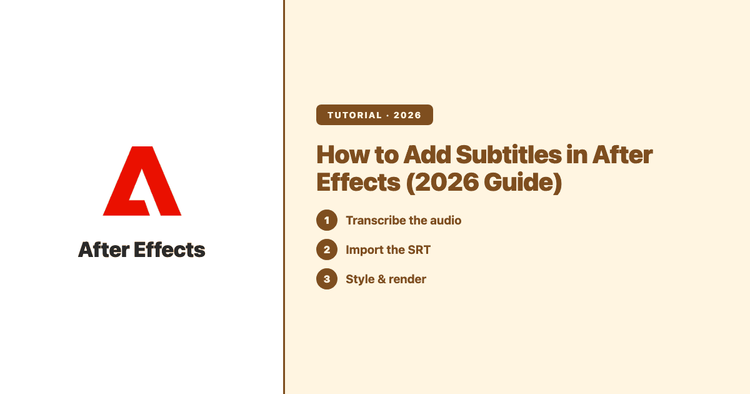
After Effects has no built-in speech-to-text and no native SRT import. This guide covers the four real workflows for adding subtitles in AE 26, ranked by setup time and total cost, and shows where each one breaks.
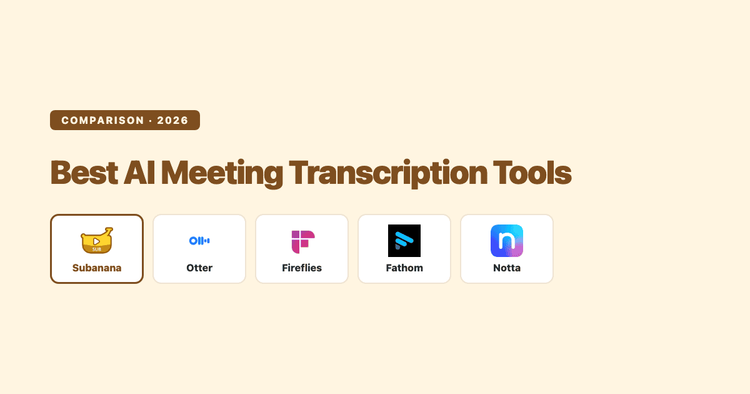
A documentation-based roundup of seven meeting transcription tools — Otter, Fireflies, Fathom, Descript, Happy Scribe, Rev, and Subanana. Pricing, language coverage, integrations, and the buyer profile each fits. Sourced from each tool's published pages in May 2026.
Yes — ChatGPT can turn a meeting into minutes, either by summarising a transcript you paste in or with its macOS Record mode. Here's how each works, where each falls short, and when a dedicated transcription tool is the better call.
Built-in Zoom / Google Meet captions cover the basics for an English-only meeting. They don't cover the harder case: a conference with attendees who speak different languages, where each person needs the live captions in their own language on their own device. Here's how that actually works, and the tools that make it practical without a five-figure enterprise contract.
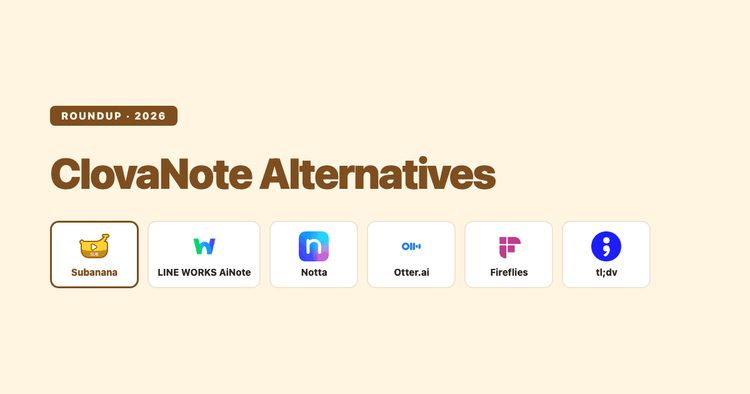
ClovaNote is NAVER's popular free note-taker, but it transcribes only Korean, English, Japanese and Chinese. If you need more languages, a Western meeting ecosystem, or higher paid limits, here are six alternatives compared on the facts that matter — languages, free tiers and meeting-bot coverage.
Fireflies leans CRM-native with conversation intelligence; Subanana leans multilingual with user-selectable summary models. Comparing what each tool publishes about itself, without invented benchmarks.
Transcribe Zoom meetings effortlessly with our expert guide. Explore Zoom's native tools, live captions, editing tips, and FAQs for better records, productivity and inclusivity!
In the modern world of digital media, videos are an extremely important form of content, and adding subtitles to your videos can bring multiple benefits. Whether or not you have the habit of adding subtitles to your video content, you should consider adding them to your videos.
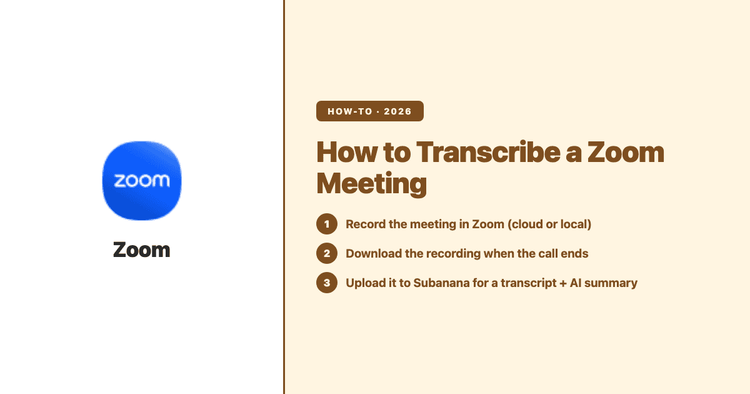
Zoom can transcribe your meetings, but the good transcript is locked behind a paid plan and cloud recording, the summary needs AI Companion, and a recent change means you can no longer save the live captions. Here's exactly what Zoom does on its own, where the walls are, and how to record a call and turn it into a clean multilingual transcript plus a structured summary in Subanana.
A documentation-based side-by-side of Subanana and Wordly for live multilingual captioning and translation. Pricing models, language coverage, integrations, support tiers — sourced from each tool's published pages in May 2026.