
ब्लॉग
नवीनतम लेख
सबटाइटलिंग, ट्रांसक्रिप्शन और लाइव कैप्शन पर गाइड — उन्हीं लोगों द्वारा लिखे गए जो इन्हें बनाते हैं।
सबटाइटलिंग, ट्रांसक्रिप्शन और लाइव कैप्शन पर गाइड — उन्हीं लोगों द्वारा लिखे गए जो इन्हें बनाते हैं।
जो कहा गया उसे दोबारा टाइप करना बंद करें।
इस भाषा में अभी कोई लेख नहीं है। ये रहे अंग्रेज़ी में हमारे नवीनतम गाइड।
The best podcast transcript generator should do more than turn audio into words. It should help you publish accessible transcripts, create searchable show notes, and repurpose each episode faster.
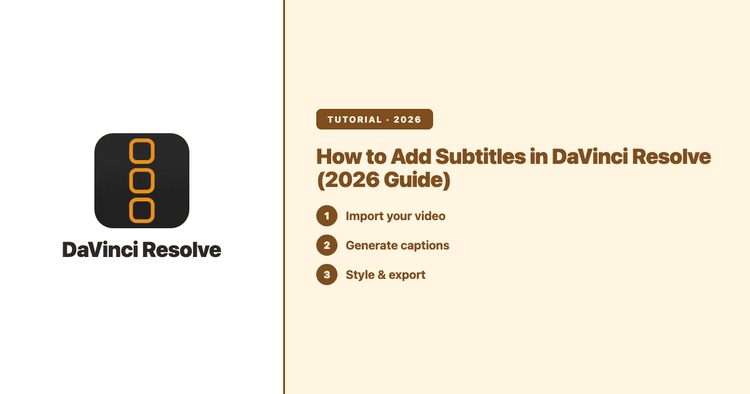
Learn how to add subtitles in DaVinci Resolve with auto-subtitles or by importing a translated SRT, then refine the track using Resolve’s built-in subtitle tools. Translation happens outside Resolve — the workflow takes minutes in a browser.
Human transcription still matters when a record needs legal authority, human accountability, or a formal sign-off. For meetings, podcasts, interviews, and creator content, AI transcription is usually faster, easier to scale, and capable of handling far more of the workflow.
Looking for TurboScribe alternatives usually means one of two things: you want more than file-to-transcript conversion, or TurboScribe’s single-user model does not fit your workflow. This is a direct and documented comparison, including the cases where TurboScribe is the better choice.
Speaker labels tell you who said what in a transcript. This guide explains how AI diarization works, where it gets things wrong, how to spot each kind of mislabel, and when interviews, meetings, focus groups, and podcasts actually need it.
Captioning is the process of turning a video or event's audio — speech and the non-speech sounds you'd miss with the sound off — into synchronized on-screen text. This is the map of the whole category: the types of captioning, the human-vs-AI methods, and how the modern AI form lets you caption a live event in real time.
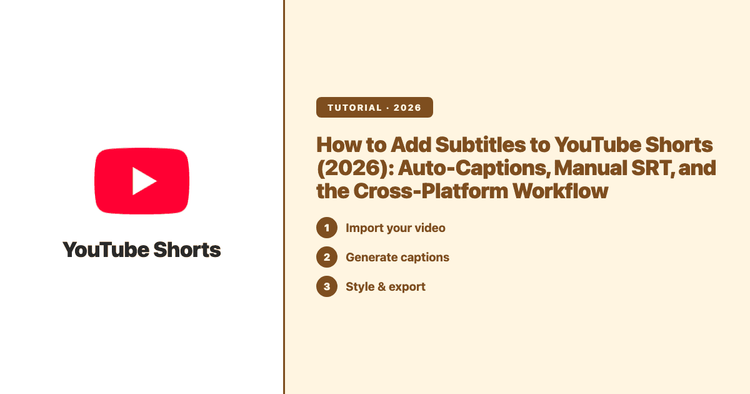
There are three ways to put subtitles on a YouTube Short: let YouTube auto-caption it and edit the result, upload your own caption file, or burn the subtitles into the video before you post. Here are the exact YouTube Studio steps for each, and how to pick.

An honest, documentation-based roundup of live captioning tools and services for 2026 — segmented into human-CART / enterprise providers (Ai-Media, Verbit, 3Play Media) and AI-automatic / self-service tools (Otter, Wordly, EventCAT, Subanana). Which fits your event, your budget, and your accuracy bar.

An action item is a specific, assigned next step that comes out of a meeting — a clear task, one named owner, and a deadline. Here's the anatomy of a good one, how it differs from a task, a decision, and a plain note, and how to capture them so nothing slips.

Qualitative research transcription means turning interview and focus-group recordings into speaker-labelled, timestamped text you can code line by line. This guide explains why auto-captions fall short for analysis, how to choose between verbatim and intelligent verbatim, and a practical workflow using Subanana's transcript mode to get a transcript that drops cleanly into your coding software.

An honest, documentation-based comparison of four AI meeting assistants — Fathom, Otter, Fireflies, and Subanana — across accuracy approach, language coverage, summary quality, integrations, and pricing. Every figure comes from each tool's published docs.
To turn a voice recording into a transcript: get the file off your phone or recorder, run it through automatic transcription, correct the passages your work actually depends on, then export in the format your next tool reads. For interviews, field research, and personal notes, that gives you a searchable working document instead of audio you have to replay.